



How to Tell if a Digital Marketing Agency Fits Your Industry
By Beholder Agency • May 13, 2026

You're not hiring a full-service marketing agency in Philadelphia to win design awards. You want more calls, more quote requests, and more booked work without wasting money.
If you run a construction, landscaping, roofing, or plumbing business, the right partner should understand how your jobs are sold. It should know how local demand shifts, how fast leads need a reply, and which leads turn into real revenue. A polished website alone doesn't prove that.
The better test is fit . When an agency knows your trade, offers the right services, and works at the same growth stage you're in, your marketing starts to work like a system.
Look for proof that the agency understands your trade
Industry fit starts with proof, not promises. A digital marketing agency that works well for a law firm may struggle with a roofer or plumber. Your business has service areas, weather-driven demand, urgent calls, and buyers who often choose the first company that looks trustworthy and answers fast.
If an agency can't explain how your leads become booked jobs, it doesn't know your trade well enough.
Check for case studies, reviews, and examples from similar businesses
Ask for examples from businesses close to yours. You want more than a logo wall or a few kind words. Look for before-and-after results, lead growth, booked jobs, better map visibility, lower cost per lead, or a stronger close rate.
Generic success stories don't help much. Traffic growth sounds nice, but traffic that never becomes an estimate is noise. A roofing company, plumbing contractor, landscaper, or builder needs proof that the agency can attract local demand and turn it into calls and quote requests.
Good proof also has context. Maybe the agency helped a plumber cut wasted ad spend with digital marketing services. Maybe it improved local search visibility for a roofer before storm season. Maybe it helped a landscaper fill a slower month with higher-value projects. If you want a second opinion on what trade-focused proof looks like, this guide for contracting businesses makes the same case.
Make sure they understand how your customers buy
Home service buyers don't all move the same way. Some need help now because a pipe burst. Others plan a roof replacement for months. A landscaping client may compare bids, check reviews, and wait for the season to change.
Your agency should know those differences. It should build fast-response campaigns for urgent work, trust-based pages for larger projects, and seasonal campaigns for planned services. It should also know that location, reviews, financing, and proof of real work often matter more than clever taglines.
When you talk with an agency, listen for how it describes your buyer. If it speaks in generic terms about "brand awareness" but can't explain emergency demand, service-area trust, or project-size differences, it's probably guessing.
Judge the agency by the services they connect to your goals
The right fit also shows up in the services they connect. You don't need random activity. You need local search visibility, a site that converts, paid campaigns that match your margin goals, and lead tracking that shows which channels bring work.
Ask how they handle local visibility and service-area searches
When people search "roof repair near me" or "plumber in [city]," local search often decides who gets the call. So ask how the agency handles your Google Business Profile, service-area pages, reviews, citations, and location-based content. Those pieces need to work together.
Trade businesses live on geography. If you serve three counties, want more work in one city, or plan to expand into a new market, the agency should map that clearly. It should know how to build pages around the places you actually serve, not stuff your site with weak city names. This construction marketing agency checklist highlights the same issues, along with price clarity and seasonality.
Look for websites built to turn visitors into leads
Then look at the website. A strong trade site loads fast, works well on phones, and makes calling easy. It has real service pages, clear quote forms, trust signals, and photos of your work. It also shows reviews, credentials, warranties, and the areas you serve.
Design matters, but conversion matters more. If a site looks sharp and hides the phone number, it isn't helping your business. The same goes for long forms, weak service pages, or stock images that don't match the jobs you do.
Expect ads and content to support real lead quality
Paid ads and content should support the kind of work you want more of. Maybe you want emergency plumbing calls. Maybe you want larger construction projects and fewer bad-fit leads. A good agency builds campaigns around job type, season, location, and margin, then uses content and reviews to build trust before the call.
That approach is far more useful than chasing traffic for its own sake. You can see a similar view in this construction company agency guide , which focuses on lead quality, search strategy, and paid media, not empty visibility numbers.
Ask how they measure results and report what matters
A good digital marketing agency should talk about results in business terms. That means calls, forms, quoted jobs, booked appointments, and revenue, not likes or random traffic spikes. If you're not sure how your current marketing stacks up, Take our digital marketing assessment before you sign anything.
Look for reporting tied to leads, jobs, and return on spend
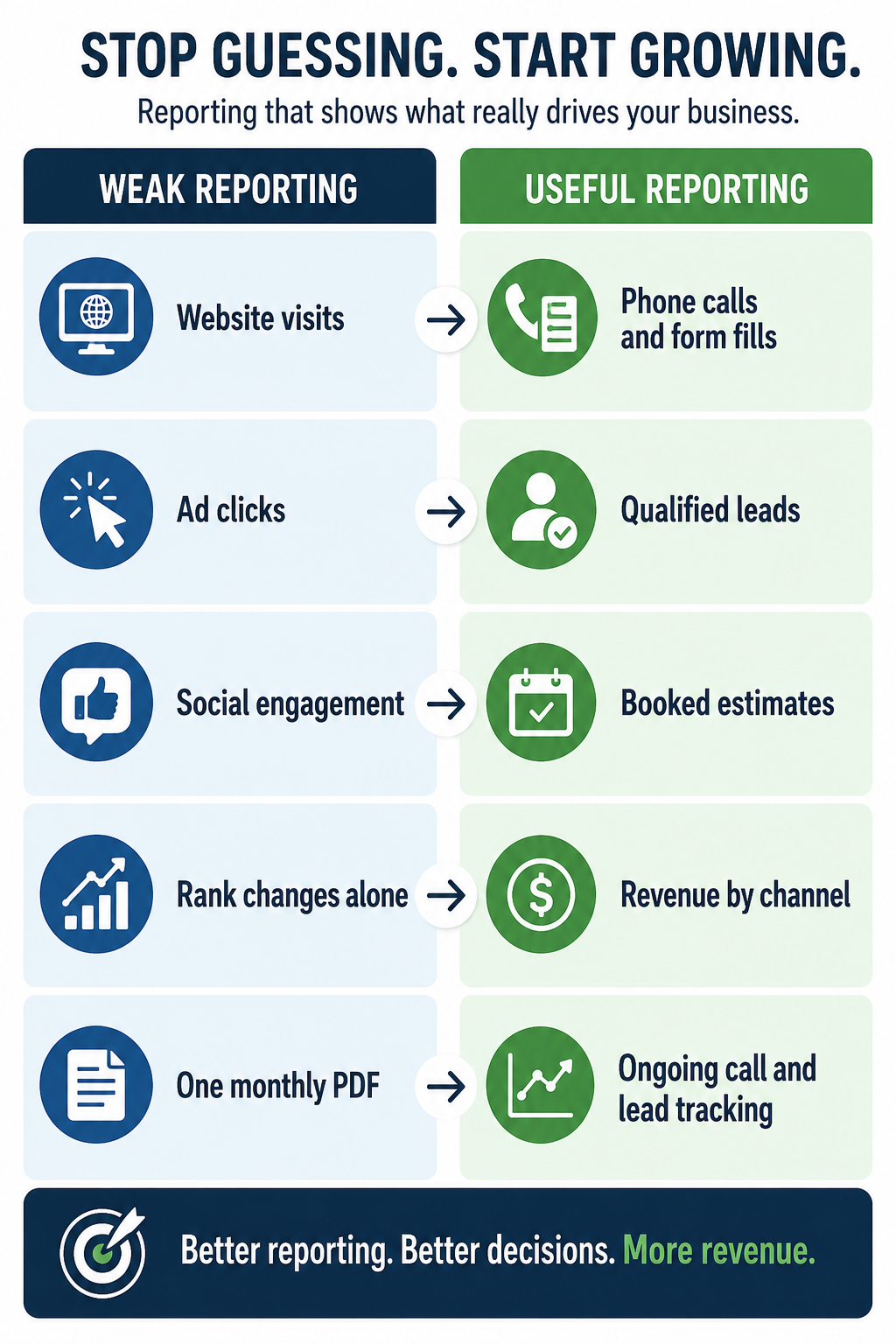
Monthly reports should show where each lead came from, how many were qualified, what each one cost, and how many turned into work. If you spend on SEO, Google Ads, Local Service Ads, or social campaigns, you should see channel-by-channel performance. Otherwise, you can't tell what's worth keeping.
This quick comparison shows the difference:
The point is simple. Reports should help you make decisions, not admire activity.
Notice whether they adapt as your business grows
Fit also depends on timing. A smaller company may need a stronger local base first, such as map visibility, reputation work, local SEO, and a better website. Later, you may need a broader digital push, stronger content, email follow-up, or closer sales alignment.
That staged approach matters because not every business needs the same package. Better agencies meet you where you are, then expand the plan as your goals change. In practice, that means starting with local visibility, then building a more connected digital presence, and later tying marketing more closely to sales and revenue goals. Strategy, execution, and measurement should stay linked the whole way.
Watch for warning signs that the agency is not a good fit
You can spot a bad fit before you sign. Most red flags show up in sales calls, proposals, and the questions they fail to ask.
Be careful if they talk in broad claims but show no trade-specific proof
Be careful with polished pitches that promise more leads in 30 days but show no work from roofers, plumbers, landscapers, or builders. If they speak in broad terms and avoid details about service areas, seasonal demand, or lead handling, move on. A real partner can explain your customer path in plain English.
It also helps to notice what they ask. Do they want to know your best jobs, margins, close rate, slow months, and target areas? Or do they jump straight to selling ads? The second approach usually means you're getting a template, not a plan.
Avoid agencies that sell tactics without a real plan
Single tactics rarely fix a weak system. Social posts alone won't solve poor local visibility. Ads alone won't work if your site loads slowly or nobody answers the phone. SEO alone won't help if you don't track calls or ask for reviews.
You want a connected plan. That means each part supports the next one: local visibility brings visits, the website turns visits into leads, follow-up helps close jobs, and reporting shows what paid off. The right agency should be able to explain that process clearly. If it can't, you're more likely to buy activity than results.
Conclusion
The right agency isn't the one with the slickest pitch. It's the one that understands how your trade wins work, shows proof from similar businesses, and ties every service back to calls, quotes, and booked jobs .
If you run a construction, landscaping, roofing, or plumbing business, generic marketing will cost you more than it helps. You need a partner that understands local demand, lead quality, and the stage of growth your business is in.
If you want a clearer read on whether your current setup fits your business, fill out the form to book a free marketing consultation.

Insights to fuel your
marketing business
Sign up to get industry insights, trends, and more in your inbox.
Contact Us
We will get back to you as soon as possible.
Please try again later.
SHARE THIS