

How to Know If Your Sales and Marketing Are Actually Aligned

Craig Andrews • August 3, 2026

Share this article

Someone asked me recently, "How do I know if my sales and marketing are aligned?" It's a fair question, and my honest answer on the latest Sales & Marketing Playbook: Unleashed was that there isn't a single formula. Alignment is less a number and more a feeling that the system is moving the way it should. But that doesn't let you off the hook — because if you can't point to a system, you almost certainly aren't aligned.

Here's how I'd check, from the marketing chair.

If there's no system, there's nothing to align

Evan caught a word I slipped in early: system. Without a system and a process, it's next to impossible to know whether your sales and marketing are working, whether they're aligned, or what's broken. What usually fills the vacuum is "random acts of marketing" — a few social posts here, an email blast there, sales quietly building their own off-brand decks because they don't feel like what marketing gave them fits what clients are actually asking for. Then the results don't come, and everyone starts pointing fingers.

That's not a talent problem. It's a communication problem wearing a talent-problem costume. The fix starts with getting sales and marketing in the same room, on the same written plan — which is exactly the kind of thing we pressure-test in a marketing consultation.

Marketing makes a promise. Your brand is the first impression.

We keep coming back to an analogy from an earlier episode: marketing is the dating, sales is the commitment, and the brand is what people already think of you before you say a word. As I put it on the show, the brand is what other people think of you when they first meet you — and you can absolutely blow a first impression.

For marketers, the takeaway is uncomfortable: everything you publish is a promise. If your digital marketing promises one thing and the experience delivers another, you haven't generated a lead — you've set up a disappointment. Alignment means the promise you make in the market is the promise the business can actually keep.

Closing the wrong client is worse than losing one

Evan made a point marketers don't hear enough: sometimes a team is closing like crazy and losing money on every deal, because the client was never a fit. A flat-fee engagement that eats twice the hours. A "big name" that comes with expectations you can't meet. That's not a sales win — it's a slow leak.

This is a marketing job too. If you reverse-engineer your best, most profitable clients — what made them tick, why they stayed — you can adjust the brand and the message so your promise pulls in more of those and fewer of the wrong ones. That's the heart of an ideal client profile: not "who could buy," but "who we should be talking to." Get it right and sales stops arm-wrestling bad-fit prospects over every penny.

Data, data, data — or it's just a vibe

I say it enough that Evan teases me about it: data, data, data. Marketing gets treated as tactical — I published X posts, I sent X emails, work done. But the only question that matters is whether it's tied to revenue. When you track leads, conversion rate, and where closed business actually came from, you can diagnose in a month: not enough opportunities means touch the marketing; plenty of opportunities but a low close rate means look at the sales side. Without the numbers, you're guessing. With them, that feedback loop is what powers real growth marketing instead of busywork.

The three signs I look for

When someone asks me if they're aligned, here's my short list from the marketing side:

  1. You're communicating. Marketing and sales talk regularly about what's happening in the field — not just at the quarterly blow-up.
  2. You know your data. You can see which marketing is producing leads, which leads close, and where the good clients came from.
  3. It suddenly feels easier. When the marketing is working, closing gets easier, because you're drawing in people who are already raising their hand and asking, "Can you fix my problem?"

If those three are true, you're aligned. If they're not, more traffic won't save you — it'll just create more expensive disappointment.

We got into all of this, plus Evan's sales-side signs and the "rabbits, deer, and elephants" client-mix framework, on the full episode. Watch or listen here: https://www.smplaybookunleashed.com

Want a second set of eyes on whether your marketing and sales are actually pulling in the same direction? Book a marketing consultation.

Recent Posts

Small business owner realizing they've outgrown DIY marketing
By Emilia Andrews July 30, 2026
Not sure when to hire a marketing agency? These are the signs your small business has outgrown DIY marketing and needs a real partner.
Desk with computer monitor, papers, and stacked cash beside a large upward arrow on a blue background
By Emilia Andrews July 29, 2026
Earned, owned, and paid media explained for small businesses — what each does, how they work together, and where to focus your budget first.

Man in navy shirt placing sticky notes on a whiteboard with headings for user-generated content and engagement
By Emilia Andrews July 28, 2026
Brand vs. lead generation: where should a small business spend first? How to sequence the two so your marketing builds a foundation and drives leads.
White paper with “Good Price” revealed through torn yellow paper
By Emilia Andrews July 27, 2026
Disconnected marketing quietly drains small business budgets. See the real cost of scattered tactics — and what a connected marketing system saves.

By Craig Andrews July 26, 2026
Marketing gets the lead; a weak first 15 seconds throws it away. Here's how to protect the marketing dollars you already spent — with intake, data, and a strong Google Business Profile.
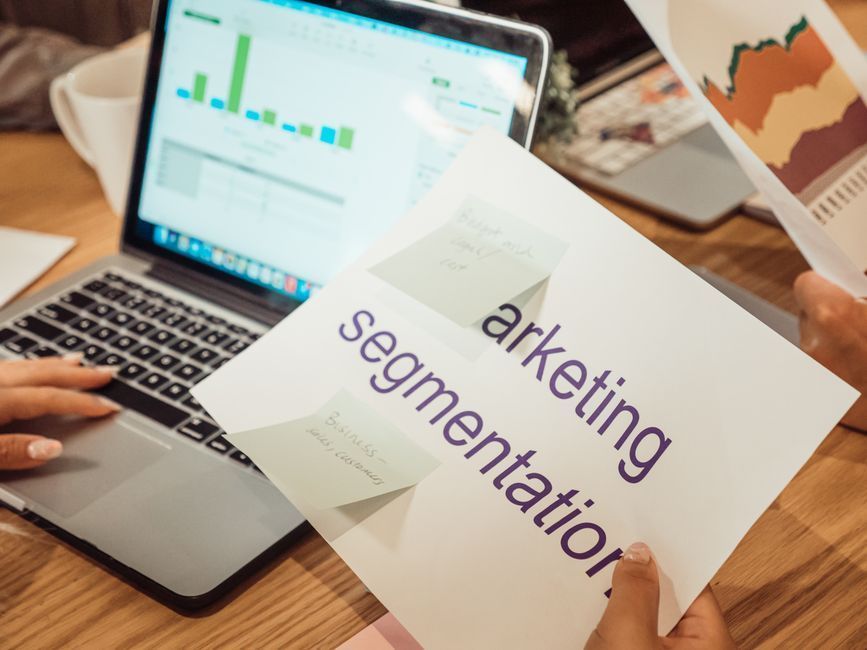
Small business owner reviewing marketing attribution data to see what's actually working
By Emilia Andrews July 23, 2026
Marketing attribution for small business, in plain English: how to tell which efforts actually drive leads and revenue, even with phone and offline sales.

People working in a bright office with desks, computers, and large windows
By Emilia Andrews July 22, 2026
When should a small business outsource marketing to an agency? The signs you've outgrown DIY — and how to know you're ready for a partner.

Salesperson deciding between cold calling and inbound leads for a B2B business
By Emilia Andrews July 21, 2026
Learn how to generate B2B leads without cold calling — using a connected system of content, targeting, and follow-up that brings buyers to you.

Small business owner building a connected marketing system
By Emilia Andrews July 20, 2026
How to market a small business without wasting budget: build a connected system that ties brand, digital, and lead gen to measurable revenue.
Brand, website, and ads aligned as one connected marketing system
By Craig Andrews July 16, 2026
Brand consistency across your website and ads isn't cosmetic — it's what builds trust and makes marketing easier. Here's why they should work as one system.

Show More