


The Real Cost of Disconnected Marketing


By Emilia Andrews July 27, 2026

I'm working through this exact situation with a client right now. When we took a deep dive into their ad campaigns, the keywords being targeted weren't even close to what the business actually does. Literally not what they do. Meanwhile the previous provider was reporting impressions, clicks, spend — all the activity metrics — while sales opportunities sat at zero. That's the real cost of disconnected marketing: tens of thousands of dollars spent on advertising for the wrong audience, and it's not a hypothetical, it's happening as I write this.

A vivid example of the drain

Money lost is the obvious cost. The quieter one is time. While the budget burned on the wrong keywords, competitors kept doing the work they needed to do, and this client hadn't moved. That delay doesn't just cost the quarter — it costs the next round of client and prospect opportunities too, because the ground competitors gained doesn't reset.

It didn't stop at ads, either. The website's bounce rate was through the roof, and that was quietly damaging the perceived credibility of what the business does — not because the business itself was doing anything wrong, but because the disconnect between the ads and the site experience made everything feel a little off to visitors. We started fixing it, and 48 days in, we're already seeing real movement.

What reconnecting the system actually saved

In real numbers: this client was spending roughly $28,000 a quarter on advertising that wasn't converting. After stripping it down and focusing on the specific niche the business actually serves — matching intent to what searchers were genuinely looking for — we got them better results for $4,500 a quarter. Same goal, a fraction of the spend, because the targeting finally matched reality.

The result isn't just the savings. Visitors stick around longer, fill out more forms, make more calls, use the chat feature. With better metrics actually tied to outcomes, we can double down on what's working and reinvest in it, instead of shrugging and saying "we tried it, it didn't work."

What disconnected marketing feels like day to day

"Disconnected marketing" is a bit of a misnomer, because from the owner's seat it doesn't look disconnected at all — it looks like marketing is happening. Posts are going out. Someone's doing something. The problem is that most owners aren't their own ideal customer, so they can't feel the gap the way a prospect experiences it.

What's actually missing is a roadmap: a sales system and process broken down by ICP, targeted to the specific people the business is trying to reach, instead of a broad "let's throw it out there and see" approach. Owners need to be able to ask "what are the results?" and get a tactical answer — on the digital side, the revenue side, whatever metric matters. This is exactly what our Revenue Cookbook™ is built to show: your sales number needed to hit a revenue goal, and directly under it, the marketing number required to feed that goal. When sales and marketing operate off two separate numbers instead of one shared one, results take far longer to show up. When they're aligned symbiotically, they move faster — and the ratio between marketing touches and sales contacts (what used to be 3x, then 5x, and now closer to 7x) becomes something you can actually plan around instead of guess at.

The hidden cost owners never count

Stress. It's the softest and most overlooked cost of disconnected marketing, and often the biggest one. It's the overnight thinking — I'm doing this, why isn't it converting, I thought this message would land and it didn't. That stress doesn't stay contained to the business. It shows up as time away from family, health strain, and the erosion of whatever work-life balance a business owner has left. The financial cost of disconnected marketing is real, but the toll it takes on the person running the business is usually bigger than the invoice.

Reconnecting the system

Disconnected marketing rarely looks like a crisis from the inside — it looks like normal activity that just isn't converting. The fix is the same connected marketing strategy we keep coming back to: a roadmap tied to a real number, not a stack of disconnected tactics run in parallel.

If any of this sounds familiar — spend that isn't converting, a website that isn't holding attention, sales and marketing chasing different numbers — a marketing consultation is where we'd start untangling it, and it's the same starting point behind our digital marketing services.

Get A Digital

Marketing Audit

Get a Marketing Score Automatically


White abstract arrow logo on a dark blue rounded square app icon

Insights to fuel your

marketing business

Sign up to get industry insights, trends, and more in your inbox.

Contact Us

SHARE THIS

Latest Posts

By Craig Andrews August 3, 2026
Sales and marketing "alignment" is easy to say and hard to prove. Here are the marketing-side signs it's real — a system, the data, and a promise your brand can keep.

Small business owner realizing they've outgrown DIY marketing
By Emilia Andrews July 30, 2026
Not sure when to hire a marketing agency? These are the signs your small business has outgrown DIY marketing and needs a real partner.
Desk with computer monitor, papers, and stacked cash beside a large upward arrow on a blue background
By Emilia Andrews July 29, 2026
Earned, owned, and paid media explained for small businesses — what each does, how they work together, and where to focus your budget first.
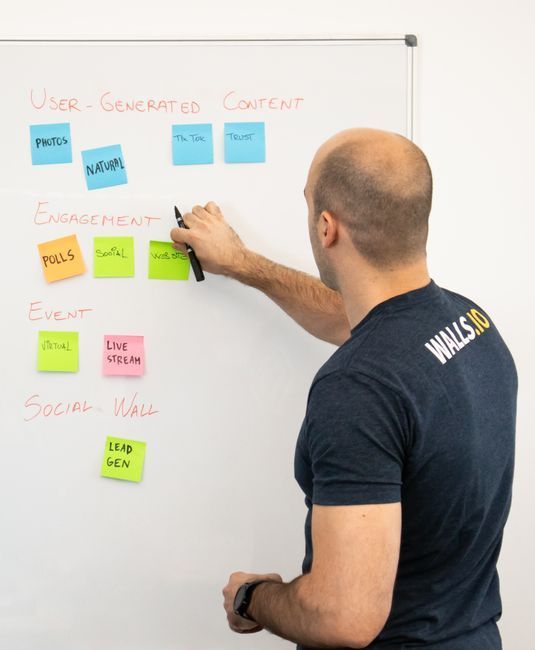
Man in navy shirt placing sticky notes on a whiteboard with headings for user-generated content and engagement
By Emilia Andrews July 28, 2026
Brand vs. lead generation: where should a small business spend first? How to sequence the two so your marketing builds a foundation and drives leads.

By Craig Andrews July 26, 2026
Marketing gets the lead; a weak first 15 seconds throws it away. Here's how to protect the marketing dollars you already spent — with intake, data, and a strong Google Business Profile.

Small business owner reviewing marketing attribution data to see what's actually working
By Emilia Andrews July 23, 2026
Marketing attribution for small business, in plain English: how to tell which efforts actually drive leads and revenue, even with phone and offline sales.

People working in a bright office with desks, computers, and large windows
By Emilia Andrews July 22, 2026
When should a small business outsource marketing to an agency? The signs you've outgrown DIY — and how to know you're ready for a partner.

Salesperson deciding between cold calling and inbound leads for a B2B business
By Emilia Andrews July 21, 2026
Learn how to generate B2B leads without cold calling — using a connected system of content, targeting, and follow-up that brings buyers to you.

Small business owner building a connected marketing system
By Emilia Andrews July 20, 2026
How to market a small business without wasting budget: build a connected system that ties brand, digital, and lead gen to measurable revenue.
Brand, website, and ads aligned as one connected marketing system
By Craig Andrews July 16, 2026
Brand consistency across your website and ads isn't cosmetic — it's what builds trust and makes marketing easier. Here's why they should work as one system.
Show More