



Why Your Website Isn't Generating Leads (And How to Fix It)


By Craig Andrews July 9, 2026

“My website looks great — so why isn’t it generating any leads?” I hear this constantly. The site is clean, it’s live, it maybe cost a fair bit to build — and the contact form stays quiet. After years of diagnosing this at Beholder, I can tell you the problem is almost never how the site looks. It’s whether the site answers the question your customer was actually searching for. Here’s what’s really going on, and the fixes most owners never think to make.

Your pages have to answer the question people searched

When someone lands on a page of your site, they want one thing: the answer to what they were searching for. That’s it. A lot of owners pour their energy into making the site pretty — and looks do matter — but if the page doesn’t answer the visitor’s actual question, they leave and no form gets filled out. A site that talks about you instead of your customer is the most common reason a good-looking website generates nothing.

Getting this right takes research, messaging, and branding — knowing the real questions your buyers ask and writing each page to answer them plainly. That’s where marketing consultation services come in: define the positioning and the message before you worry about the polish. When the page is client-centric and the search that brought them there matches what they find, people convert.

In the AI era, being live isn’t the same as being found

Here’s the newer wrinkle. These days people get answers in a lot of places — an AI assistant, a search engine, a quick chat — often before they ever reach your website. So just because your site exists doesn’t mean anyone is finding you. You have to create content that’s friendly to both search engines and AI tools, so you show up in those results alongside Google and Bing. That’s a core part of digital marketing services — making sure the right people can actually discover you in the first place.

Pretty doesn’t convert — pain and trust do

A good-looking website still doesn’t convert if it misses this: people don’t reach out because your site is attractive or because you spent a lot on ads. They don’t care about that. They convert for two reasons — you can solve their problem, and they trust you to do it. Pain drives the click; trust closes it. And “pretty” isn’t the same as trustworthy, because pretty is relative.

Think about a toothache. The moment it hits, you search for a dentist — usually the closest one who can fix it — and you book. You’re not comparing website designs; you’re solving a pain. So the work is to understand your customer’s pain in all its variations, then make it obvious on the page that your solution is the answer to it. Do that, and your site converts far better.

The fix owners least expect: lightning-fast intake

This is the one almost nobody thinks of, and it has nothing to do with redesigning the site. Your intake has to be immediate. A customer went through a lot to find you — searches, their phone, a billboard, a referral, a social post, a quick AI chat — and when they finally reach out, whether by call, email, text, or DM, you have to answer like they just knocked on your front door and you opened it.

“If they knock and you say ‘let me send you to my scheduler’ or ‘I’ll call you back tomorrow,’ you’ve lost them — the next answer is one click away.”

Every channel needs an intake that’s fast, thorough, and free of cracks. Whether it’s a person, an automated system, or an AI assistant, someone has to answer the customer’s question in the moment, because that’s the expectation they arrive with. Slow intake quietly kills more leads than a dated homepage ever will.

Close the loop: report your leads back

The last fix is a feedback loop. Not every lead is good, and not every lead is bad — but a lead is a lead, which means the marketing did its job and brought someone to your door. If your sales process doesn’t answer them quickly and then classify them — good, bad, or ugly — and that information never makes it back to us, we can’t improve anything. When it does come back, we can see which questions your ideal customers are really asking, whether the pages are answering them, and where to fix things next.

That’s the value of a growth marketing partner: we reevaluate every month what your buyers are asking and how clearly you’re answering, then tighten it. When the page answers the question and the intake is fast, it’s realistic to see a 5–10% lift in leads — often more. For the bigger picture on turning that traffic into customers, see our guide to lead generation for small business.

The bottom line

If your website isn’t generating leads, resist the urge to just redesign it. Make each page answer the question people searched, be findable in an AI-driven world, speak to your customer’s pain, answer every inquiry instantly, and feed the results back so the system keeps improving. Book a free marketing consultation with Beholder and we’ll pinpoint exactly where your site is leaking leads — and what to fix first.

Get A Digital

Marketing Audit

Get a Marketing Score Automatically


White abstract arrow logo on a dark blue rounded square app icon

Insights to fuel your

marketing business

Sign up to get industry insights, trends, and more in your inbox.

Contact Us

SHARE THIS

Latest Posts

By Craig Andrews August 3, 2026
Sales and marketing "alignment" is easy to say and hard to prove. Here are the marketing-side signs it's real — a system, the data, and a promise your brand can keep.

Small business owner realizing they've outgrown DIY marketing
By Emilia Andrews July 30, 2026
Not sure when to hire a marketing agency? These are the signs your small business has outgrown DIY marketing and needs a real partner.
Desk with computer monitor, papers, and stacked cash beside a large upward arrow on a blue background
By Emilia Andrews July 29, 2026
Earned, owned, and paid media explained for small businesses — what each does, how they work together, and where to focus your budget first.
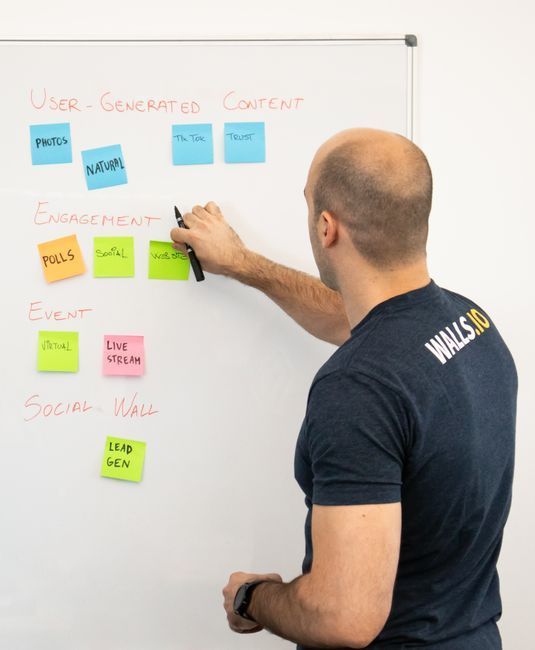
Man in navy shirt placing sticky notes on a whiteboard with headings for user-generated content and engagement
By Emilia Andrews July 28, 2026
Brand vs. lead generation: where should a small business spend first? How to sequence the two so your marketing builds a foundation and drives leads.
White paper with “Good Price” revealed through torn yellow paper
By Emilia Andrews July 27, 2026
Disconnected marketing quietly drains small business budgets. See the real cost of scattered tactics — and what a connected marketing system saves.

By Craig Andrews July 26, 2026
Marketing gets the lead; a weak first 15 seconds throws it away. Here's how to protect the marketing dollars you already spent — with intake, data, and a strong Google Business Profile.
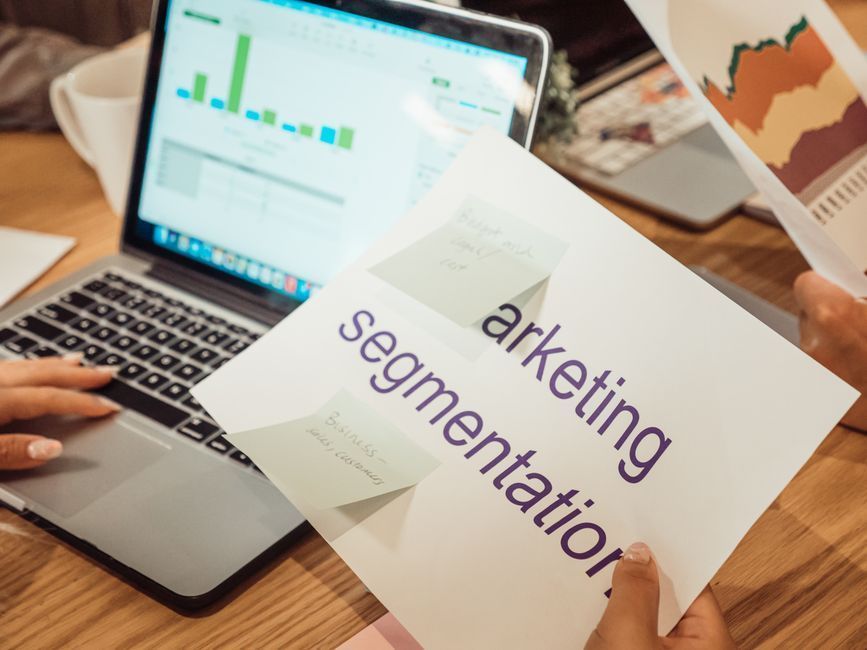
Small business owner reviewing marketing attribution data to see what's actually working
By Emilia Andrews July 23, 2026
Marketing attribution for small business, in plain English: how to tell which efforts actually drive leads and revenue, even with phone and offline sales.

People working in a bright office with desks, computers, and large windows
By Emilia Andrews July 22, 2026
When should a small business outsource marketing to an agency? The signs you've outgrown DIY — and how to know you're ready for a partner.

Salesperson deciding between cold calling and inbound leads for a B2B business
By Emilia Andrews July 21, 2026
Learn how to generate B2B leads without cold calling — using a connected system of content, targeting, and follow-up that brings buyers to you.

Small business owner building a connected marketing system
By Emilia Andrews July 20, 2026
How to market a small business without wasting budget: build a connected system that ties brand, digital, and lead gen to measurable revenue.
Show More