





Build a North Carolina Local SEO Plan That Gets More Calls
When someone in North Carolina searches for a local service, they usually want a quick answer and a business they can trust. They don't want a maze of pages. They want to call, book, or fill out a short form.
That is why good local SEO plans should do more than bring traffic. It should connect your website, Google Business Profile, reviews, service pages, and local content so that more visitors become real leads. If you want local help pulling those pieces together, working with a digital marketing company in Raleigh, NC can give you a clearer path.
Start with the local customers you want to reach
Your plan should start with people, places, and problems, not random tactics. If you run a small or midsize business, you need local visibility that brings in qualified leads, not broad traffic from people you will never serve.
Define the service areas that matter most
Pick the cities, neighborhoods, and counties that match your actual service area. If you serve Raleigh, Cary, Apex, and Wake Forest well, focus there first. Trying to rank across all of North Carolina often spreads your budget and time too thin.
You should weigh three things: demand, competition, and your ability to close leads once they contact you. A plumber can often serve a wider radius than a dental office. A law firm may target a whole metro area, while a therapist may draw most clients from nearby zip codes. These North Carolina local search tips line up with what works for many service businesses, local focus beats vague reach.
Match your offer to the way local buyers search
Search intent changes the page you need and the call to action that works best. Someone with a burst pipe wants a phone number now. Someone looking for an accountant may compare options for days before filling out a form.
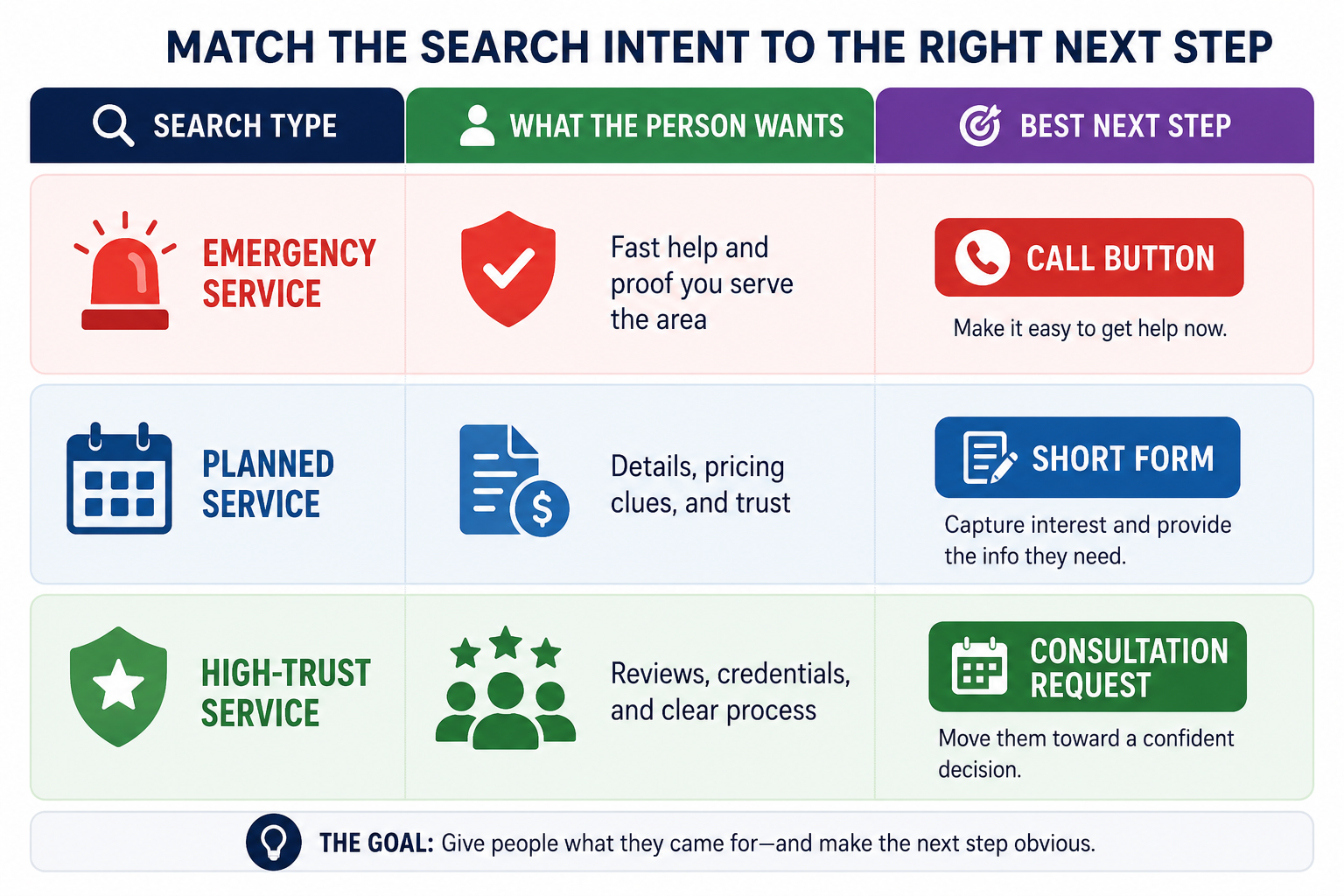
A simple way to map intent looks like this:
| Search type | What the person wants | Best next step |
|---|---|---|
| Emergency service | Fast help and proof you serve the area | Call button |
| Planned service | Details, pricing clues, and trust | Short form |
| High-trust service | Reviews, credentials, and clear process | Consultation request |
This matters across industries. Home services often win calls with speed. Healthcare services need trust and clarity. Professional services, such as law or accounting, often need stronger proof before someone reaches out.
A local SEO plan works when a nearby buyer can tell, within seconds, that you solve their problem and how to contact you.
Build a website that makes it easy to call or contact you
Your website should help people act fast once they find you. Local search, clear messaging, and good web design work together. If your site is hard to read on a phone, local rankings alone won't save you.
For many businesses, this is where connected digital marketing services for small businesses make a difference. Your website, content, SEO, and local presence should support the same goal, more calls and form fills.
Make your main service pages clear and local
Each core service page should answer four basic questions fast: who you help, what you do, where you work, and why someone should choose you. That sounds simple, but many small business sites miss one or more of those points.
Use plain headings. Show the service area in a natural way. Add proof that fits the page, such as reviews, short case examples, photos of your work, or common questions. If you repair HVAC systems in Raleigh and Cary, say that clearly. If you help small law firms with bookkeeping across the Triangle, say that too.
Vague claims hurt conversions. Clear language earns trust.
Put your phone number and form in the right places
Most local visitors won't hunt for contact details. Put your phone number at the top of the page, in the footer, and near the main call to action. On mobile, a sticky call button often helps because people can tap without scrolling back up.
Forms should feel quick and low-pressure. Ask only for what you need at first, such as name, phone, email, service need, and zip code. If your form looks long, people leave. A short path to contact often wins more leads than a perfect-looking page.
As one North Carolina local SEO guide points out, mobile experience and local trust signals have a direct effect on conversion rates. That is why layout matters as much as rankings.
Use service area pages only when they add real value
Location pages should help the reader, not pad your site. If every city page says the same thing with a different town name, it usually won't rank well or convert well.
Build a local page only when you can add useful detail. Mention the service issues common in that area. Include local proof, such as testimonials, nearby projects, travel times, or how your process works there. A page for Durham should not read like a copy of a page for Fuquay-Varina.
Win more local searches with your Google Business Profile, reviews, and listings
Before people visit your site, they often judge your business from your search listing alone. Your Google Business Profile, reviews, and directory listings help you appear in local results and help people trust you enough to click.
Fill out every part of your Google Business Profile
Complete profiles tend to perform better because they give Google and your customers more context. Add your correct business name, phone number, hours, categories, services, photos, and service area. Keep it honest and current.
Choose categories that match your real work. Add service details that reflect how customers search. Post updates and fresh photos from time to time. If you are a service-area business, make that clear rather than forcing a street address that confuses people.
Ask for reviews that mention the work you did
Reviews help in two ways. They build trust, and they give search engines more local context. Ask happy customers soon after the job is done, while the result is fresh in their mind.
You can guide the ask without scripting it. A roofer might ask a client to mention storm repair in Cary. A chiropractor might ask a patient to mention back pain relief in Raleigh. Let customers use their own words, because natural reviews read better and carry more weight.
Keep your name, address, and phone number consistent everywhere
Your business details should match across your website, Google Business Profile, Facebook, directories, and local listings. Small differences create confusion for people and search engines.
These local ranking tips for North Carolina businesses make the point well, consistency in your name, address, and phone number is basic local SEO work, but it still matters. If people cannot tell which number is right, they may never call.
Create local content that answers real questions from North Carolina buyers
Content helps local SEO when it answers the questions people already have. It should support trust, improve visibility, and move readers closer to contact. Repeating city names without adding value won't do much.
Write pages and posts around common local problems
Good local topics come from real buying situations. In North Carolina, that may mean storm damage, summer HVAC strain, pest issues after heavy rain, insurance questions, or tax-season deadlines. For healthcare and professional services, it might mean treatment options, compliance concerns, or how to choose the right provider.
These topics often attract people who are closer to hiring because the problem is already clear. A post about "what to do after hail damage in Raleigh" can bring in better leads than a broad page about roofing trends.
Show local proof through case studies and examples
People trust businesses that can show nearby results. A short case study, a before-and-after example, or a simple story about a client in a nearby city can make your offer easier to believe.
Keep the story short. State the problem, what you did, and the result. If you help home service companies, show the lead outcome. If you work in healthcare or professional services, focus on process, communication, and trust. Local proof often pushes a hesitant visitor to call.
Use location names naturally, not everywhere
You should mention cities and service areas where they help the reader. Use them in titles, headings, image captions, review snippets, and page copy when they fit. Stuffing every paragraph with "Raleigh," "North Carolina," or a county name makes pages harder to read.
A good test is simple. Read the page out loud. If it sounds like a person wrote it for a local customer, you are on the right track.
Track the signals that tell you your local SEO plan is working
Rankings matter, but they are not the end goal. You want more calls, more form fills, and better lead quality. If your plan does not support revenue, it needs work.
Watch calls, forms, and qualified lead sources
Track which pages, listings, and profiles bring in real leads. Look at phone calls, form submissions, booked appointments, and lead quality. If traffic rises but contacts stay flat, something is off.
This matters even more in competitive markets like Raleigh. These Raleigh local SEO results show why, visibility only matters when it leads to calls, bookings, and clear demand from nearby buyers.
Use simple monthly reviews to improve weak spots
Check performance once a month. Look at your top pages, your Google Business Profile activity, your form completion rate, and where visitors drop off. Then make small changes.
You might rewrite a headline, add stronger photos, shorten a form, improve page speed, or move a call button higher. Small fixes add up when you review them often.
Know when to get outside help
You can handle part of this plan in-house, especially if your business has one location and a short service list. Still, it gets harder when you have many service areas, weak tracking, old website issues, or too many disconnected tactics.
At that point, outside help can save time and reduce guesswork. If you want support that ties strategy to action, expert marketing consultation services can help you sort priorities and focus on what will bring better leads.
The local SEO plan worth keeping
The best plan is usually the simplest one you can keep up. Start with the right service areas, build pages that make contact easy, strengthen your local trust signals, and track what leads to calls and form fills.
If you want a clearer starting point, Take our digital marketing assessment. When you're ready for direct help, fill out the form to book a free consultation.